
Thursday, March 13, 2008

Neoconservatives and the Death of True Conservatism

Today's Republican Party seems to be dominated by evangelicals, "social conservatives," and neoconservatives (hereafter known as neocons). The Reagan presidency, the emergence of Christian dogmatists like Jerry Falwell and Billy Graham, and the tumultuous tenure of the Bush Administration represent the wholesale changes that have taken place among the American right. Displaced in this rise of new Republican thought are classic conservatives, who have been forced to obscure third parties and to the Republican fringe. The true characteristics that separated the Republican Party are diminishing as "conservatives" abandon true conservative principles for a massive pseudo-theocracy, a hawkish foreign policy, and the risible idea of "compassionate conservatism." We will see that many of the positions modern conservatives take on contemporary issues are backward when applied to the historical and sensible definition of conservatism. While the alignment of the parties is free to change as the political climate invariably shifts with time, they very way in which we describe our political beliefs should not be so easily altered. With this in mind, I am suggesting that we simply call a spade a spade. "Conservatives" as we know them today are not really conservatives.


It is possible, using an elementary understanding of the term, to arrive at the conclusion that today's conservatives truly are what they say they are. They are generally uncomfortable with change, especially on a social level, and this is one characteristic that can be defined as conservative. Other rudimentary generalizations such as this can be easily made, but when it comes to the issues that dominate Republican discourse, there is very little true historical conservatism to be found in the corresponding rhetoric. Take the issue of gay marriage and the proposed constitutional amendment banning it. Today's conservatives, like evangelical hero Mike Huckabee, so detest the idea of homosexual marriage that they support a constitutional amendment banning the practice. Just how conservative of a position is this? A federal law etched into our founding document that defines marriage, removing all state and local discretion, seems hardly indicative of the sort of ideals that defined conservatism for so long. A conservative approach may be uncomfortable with the notion of gay marriage, but would find little legitimacy in legislating it on the national level, as it would represent a striking example of government overreach.

Current trends of foreign policy belief among modern Conservatives are perhaps the best example of where actual conservatism has been left behind. The goal of the Bush Administration, from the beginning of the heavy U.S. presence in Iraq and Afghanistan, has been to establish a democracy in the troubled region. It is this influential faction of the right, represented by Bush and John McCain, that promote the exportation and implementation of democracy wherever possible. The idea of political independence through democracy in the Middle East as a solution to international terrorism is well subscribed to among today's conservatives. Yet these people are so far from the shady groves of conservatism here that it is hard to understand how beliefs of this sort are labeled as such. Historically it is has been liberals that have promoted the spread of democracy and American values. It was liberal democratic President Woodrow Wilson who first advocated the expansion of American and demoratic principles to foreign nations (hence the term for sort of policy as "Wilsonian"). This was a foreign policy that would be trumpeted by future liberal presidents FDR, Harry Truman, JFK, and LBJ. Truman would work to democratize the reconstruction of Europe and Japan after World War II, and JFK and LBJ had their hands in conquests for democracy in Vietnam, Laos, and Cambodia. Somewhere along the way, however, it became conservative to advocate policies of this sort. The long entrenched anti-interventionism of conservatives has conspicuously disappeared from their popular discourse. Bush, McCain, and aggressive foreign policy advocates are articulating a liberal vision, not a conservative one.

My third and final example of "conservative" nonsense is in regard to the Bush Administration's No Child Left Behind education policy. It is required of all education majors in the state of Pennsylvania to complete at least one course on special education and exceptionalities, and I am fulfilling that requirement this semester. In my studying of the laws regarding special education, I came across this gem of unreason: (the following quotes are from my textbook)

"The [No Child Left Behind Act] has the intention of improving students with disabilities by making sure that these students are included in the assessment of educational progress demanded of all students."
How in the name of common sense does lumping disabled students in with general students help special education students at all? This is that notion of "compassionate conservatism" roaring its ugly head again. Disabled students are not like everyone else, and it is antithetical to the purpose of education to judge them in the same way general education students are judged. Children with dyslexia, dysgraphia, and discalcula, for example, will on average almost uniformly perform at a lower level on standardized testing meant for general education students. This is to say nothing of more severe disabilities like Down Syndrome, autism, and Multiple Disability Disorder, where some students could hardly read standardized testing, much less comprehend it. Yet the scores of children of this sort are supposed to be judged the same as scores of general education students? Compounding this problem is that this will invariably lower overall test scores for most schools, resulting in funding cuts that harm all students in schools. No Child Left Behind also states that:
"Students with disabilities should not only be expected to learn the general curriculum, but also be expected to perform at a level comparable that of students without disabilities."
The idiocy of this bit of policy is scarcely comprehensible. Beyond being unrealistic and unpractical, this is pure cruelty to the special education students involved. You are going to force children with severe functional, emotional, social, and learning disabilities to take tests they cannot possibly succeed on, and then judge their results against the the same grades of regular education students? It isn't a matter of will or effort. These kids have been afflicted with disadvantages that render some tasks simply impossible to perform. Would you judge an arm amputee's strength by making him do the bench press? My non-partisan textbook puts it best: "Expecting students with disabilities to score the same, on average, as students without disabilities is expecting the impossible." (p. 60) Lastly, what is conservative about this policy? This is a national mandate effecting every public school in the United States, and not a single school can hide from its lunacy. It contradicts and overrides any privilege local governments have to dictate the terms of their own education systems.
Amid all this false characterization of political intentions, true conservatives like Ron Paul try desperately to be heard over the deafening rhetoric of the current Republican Party. If Paul falls off into obscurity, I hope someone else picks up the ball and tries to help the Republican Party find itself.

Monday, December 24, 2007

The Dogma of Pacisfism

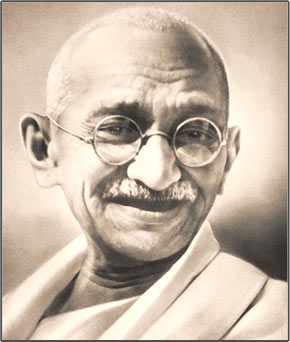
We have come to a point in our society where some categories of philosophical inquiry are propped up so high that they are apparently above criticism. Pacifism, in particular, is a worldview that has staked its ground in our status-quo as a nearly perfect moral philosophy. For evidence of this, see the esteem in which we hold pacifist figures like Martin Luther King, Mohandas Gandhi, and Mother Teresa. When criticism is able to reach the pedestal on which it sits, it nearly always revolves around the practical ramifications of holding such beliefs. It almost never described as an explicitly immoral position, which I believe it is.

Pacifism may be perfectly reasonable when the stakes are low, but in the end pacifism is merely a willingness to die, and to let others die, at the hands of the world's murderers. It is significant to note that a madman, armed only with a knife, could exterminate an entire city of pacifists. It is clear in this context that violence is a requisite for the maintenance of civil society. This may seem paradoxical, but I assure you it isn't. All it takes to recognize this is a willingness to admit that there are bound to be people in our world who are simply beyond the sort of non-violent methods we may use to prevent them from causing suffering. As the author Sam Harris puts it: "When your enemy has no scruples, your own scruples become another weapon in his hand."

When the stakes are high, pacifism can be highlighted even brighter for its shortcomings. Gandhi was known to say that the Jews should have committed mass suicide as a remedy for the Holocaust, because it would have drawn attention around the world to Hitler's violence. The obvious question here is: what would a world full of pacifists have done once its attention had been raised? This question brings to light another shortcoming of pacifism, in that in many cases it requires for its maintenance the presence of people who are willing to use violence. We may wonder where a pacifist position would leave Middle Eastern Jews in their conflict with the Muslim world, given the murderous rage a significant number of Muslims feel at the presence of infidels in "their" holy land. It would leave them either at the mercy of the West for their protection, or at the mercy of the Muslim world to suddenly realize that killing in the name of Allah isn't really a moral precept.

Needless to say, if these are the choices pacifism offers, Israel has done well to throw it on the philosophical trash heap. A worldview that in itself is not self-sustaining should be a red flag to us. Especially given the world in which we live in, where the push of a button can cause the abject suffering and death of thousands. When nuclear and biological weapons are factored into our ethical equations, pacifism simply ceases to be a possible solution.

To digress for a moment, even if pacifism were somehow worthy of the status it has gained in our discourse, it would still not lend merit to the idea that it is beyond criticism. To put it plainly, nothing should be beyond criticism, if only for the reason that any belief worth subscribing to should be able to stand up to conversational analysis. Pacifism has been branded with a rectitude seemingly so impenetrable, that it remains largely unassailed as an ethical tenet. I invite you all to join me in pulling it down out of the clouds of false righteousness.

Wednesday, December 19, 2007

The Crux of the Conflict

I'd like to address the misrepresentation of the real problem we face in the Middle East. There seems to be a mainstream belief that the cause of Muslim violence against the west are for political grievances. The culprit, many say, is an oppressive American occupation in the region. This is an idea that seems to be conventional wisdom among the left, and even subscribed to by some on the right (see: Ron Paul).

First of all, say what you will about American foreign policy in the Middle East. It is important to notice that violence against the west would be accepted here whether the United States was involved in the Middle East or not. To believe that American foreign policy is the issue is to believe that malcontent in the Middle East is driven by civic complaints. The problem with this idea is that it would require people in this part of the world to organize themselves around a nationalistic attitude. We can see very quickly, however, that this is not the case. Just who are we fighting? Saudi Arabia? Syria? Afghanistan? No. We are fighting Al Qaeda, Islamic Jihad, Hamas, Hezbollah, etc. Notice that these groups do not organize themselves around political grievances. They have theological issues against Israel and the west. Do they want to push Israel into the Mediterranean because they covet their land? No. They want to push Israel into the sea because it is populated by infidels that threaten the holy sanctity of their religion.

In the final analysis, there is nothing that explains Muslim terrorism better than the tenets of Islam. We should not be afraid to consult Occam's razor here. The Muslim world has a religious identity, not a nationalist one, so we should characterize their intentions accordingly. If we can recognize that we are dealing with a region that adheres to the tenets of Islam, how can we ignore the words of the Qur'an when we evaluate reasons for Muslim violence? "Kill disbelievers wherever you find them" (Qur'an 2:191). Why isn't drivel such as this recognized in the west as the root cause of the problem? It would be good for the Middle East to arrange itself in a national identity that fought for sovereignty, but it is important to realize that as of now this is not what they fight for.

This conflict is not based on American misadventures in the Middle East, or western colonialism, or western foreign policy in general. It is based on the fact that the Muslim world has more than its fair share of bad ideas. It is an ideological struggle, and the Muslim world recognizes this. Americans refuse to. We are losing ground in this struggle every second we fail to admit this. Our credulity is costing us precious time in meeting bad ideas with the might of liberty and democracy before they spread beyond our control.

Wednesday, November 28, 2007

Western Superiority

Our current conflict in the Middle East has been characterized by some as a "war of ideas." While I am in substantial agreement with this distinction, great deals of people in the west seem to be uncomfortable with the premise. Who are we, they say, to claim an ideological and moral superiority over the east? The thought seems to be that ethics are culturally contingent, indeed, that ethics are a subjective worldview where right and wrong is really a gray area.

Many who take issue with conclusions of this sort will argue that there really are moral truths in this world, much in the same way that there are scientific truths. They will ask why, if we would not be tempted to consult the third world on issues of technology or economics, why should we be reluctant to make similar criticisms of their ethics? Civilizations of this sort have simply not advanced to the point where they are in a position to make legitimate claims about the way the world is. It is no accident, after all, that the term "third world" exists.

Before I go on, I would like to dispel the notion that claims of this sort of are racist, which they are surely not. Consider that at the height of its power in the 16th and 17th centuries, the Ottoman Empire was one of the foremost civilizations in the world. The Ottomans were an Islamic tradition, but contributed mightily to mathematics, astronomy, and the modern calendar. They were an exceptionally tolerant civilization, as Jews and Christians lived relatively undisturbed under Ottoman rule. This is in stark contrast to a Europe during this time that was burning "heretics" at the stake and converting Muslims and Jews to Christianity in violent fashion. It is reasonable to say, at that point in history, that white culture was inferior to Mesopotamian (Middle Eastern) culture. Clearly, therefore, notions of racism are false.

Typical arguments against the equality of cultures are unavoidably abstract, however, as it is difficult in cultural discourse to make evidentiary claims supporting one side or the other. As an aspiring historian, I would like to map this debate onto a historical perspective. One of the principle conflicts of the 20th century was western liberalism vs. far eastern communism. A common historical view is that the west, especially United States, overstated communism as a threat and was largely paranoid in its dealings with the spreading communist doctrine. While this may be true to a degree, we will see that communism, as a worldview, was incredibly destructive and the direct cause of a level of human misery that may be unmatched in human history. Communist movements in the Soviet Union, The People's Republic of China, and Cambodia saw affronts to basic human rights that western liberalism could not possibly create. Joseph Stalin's Great Purge, which caused the murder of more than 1 million Soviet citizens, directly correlated with the suppression of political dissent inherent in communist doctrine. Pol Pot and the Khmer Rouge, who claimed the lives of more than 2 million Cambodians, were a communist regime bent on purging ethnic Vietnamese, Muslim and Christian Cambodians, and Buddhist monks from the Cambodian population. The Khmer Rouge targeted these groups as opponents to communist Cambodia. Finally, Mao Zedong, following his victory over the Chinese Nationalists in the Chinese Civil War, declared the beginning of the communist People's Republic of China in 1949. One of the first acts under this regime was massive land reform, which called for the redistribution of wealthy land owner holdings to the Chinese peasantry. As most land owners in China were reluctant to give up their land, Mao oversaw the slaughter of resisting land owners in order to enforce the new reforms. The maintenance of the new communist China required the deaths of an estimated 2 million people.

We may be tempted to make a distinction here between what, on the surface, seem to be political grievances. I would submit, however, that when such movements lead to the abject extermination of millions of people, the motivation ceases to be merely political. When the maintenance of "political" ideas includes mass graves, we have left politics behind for the sort of ideology that is manifestly evil. Would anyone hesitate to say that the ideals of the west were just plain better than eastern collectivism here? One simply cannot attribute liberal democracy to the sort of human destruction that one can easily attribute to the eastern ideological patterns of the 20th century. There are those who will stand up in 2007 and claim that it is arrogant to claim western moral superiority, and receive relatively little pressure for taking such a stance. I wonder just how ridiculous these people would look making the same claims in 1950, as Chinese land owners were being taken behind their homes and executed for refusing to submit to the new communist regime. It is important that our discourse begin to point out just how wayward this thinking is, or we will be unable to criticize with sufficient vigor the sort of evil ideas about the world that have already begun knocking at our door.

Tuesday, October 16, 2007

Genocidal Stupidity


Haven't written an entry in a about a month; it has been a crazy few weeks at school. Read a story on CNN.com yesterday that has brought me out of my hiatus.

The U.S. House Committee on Foreign Affairs passed a measure last Wednesday that labeled the Turkish killing of Armenians during World War I as a genocide. The Bush Administration spoke out against the measure, fearing Turkey (who denies the event as a genocide) would be antagonized to the point of stopping their cooperation with the U.S. in the Iraq war. Turkey is a key ally used for U.S. troop deployments and the movement of supplies. As predicted by those opposing the resolution, Turkey claims the House decision has put U.S./Turkey relations "in jeopardy." Turkey also recalled its ambassador in response.

Let's get one thing out of the way. The Ottoman Empire's subjugation and slaughter of 1.5 million Armenians from 1914-1918 was manifestly genocidal. The killing was state sponsored, complete with concentration camps and mass graves. Greeks, Jews, and other religious and ethnic minorities were also targeted by the Muslim majority. Nearly half of the estimated Armenian population in Turkey perished. Adolf Hitler would later use the Ottoman effort as a model for his attempted extermination of the Jews in Nazi Germany.

The distinction of genocide to these events is as obvious as it is unimportant. Outside of the Middle East, where incredulity and
ignorance already run rampant, it is a widely held opinion that genocide did indeed occur. Does this not render the House's official recognition of genocide anything but a formality? On the surface, this would seem harmless (while perhaps a waste of congressional time), but the reality of our current situation in Iraq makes the measure an unnecessary nuisance. This is a truism that is not contingent on a political party or where one stands on the Iraq war. If you favor involvement, Turkey is a vital resource for troop and supply movement. If you favor withdraw, even immediate withdraw, Turkey's cooperation is necessary for a smooth and organized redeployment from Iraq. With this is mind, why would the U.S. House Committee on Foreign Relations choose this point in time to anger one of our most important allies in the Middle East? The timing is indeed curious. The circumstances of the genocide itself make the U.S. declaration of genocide long overdue, but at the same time, now would not seem to be the most prudent time for it.

There is another aspect of this whole mess that makes it even more grotesque. As Turkey and the U.S. Congress argue over the correct language to describe an event that happened almost 100 years ago, 400,000 people have been murdered and 2 million more have become refugees in western Sudan as of September 2006. There are few in the west who fail to recognize these events as genocidal, yet the United States has yet to declare them as such, or intervene in the massacres. The United States and Europe have displayed indifference in this matter
reminiscent of the Rwandan genocides of the 1990s.

To sum up, the House Committee on Foreign Affairs has put U.S. efforts in Iraq in
jeopardy by alienating a key ally, and showed that its priorities are woefully out of line. They would rather declare a 100 year-old conflict a genocide than act on the systematic murder of thousands of people that is happening in the here and now.

This measure should be voted down by the majority of the House, and/or the
Darfur conflict should soon be likewise recognized as genocide and action should be taken against the Janjaweed.


Read more about the issue here: